

I recently listened to a very moving podcast featuring a New York Times reporter, Robert Draper, being interviewed about his therapeutic experience with a psychedelic drug. Not usually so personally transparent, Mr. Draper reveals poignantly about his history of childhood trauma and the pain he felt throughout his life. Desperate for relief, he travels to a treatment Center in Mexico that offers supervised medically assisted psychedelic trauma treatment. Mr. Draper describes intense experiences of hallucinations opening a pathway for moving beyond the burdens he carried. One of the incidents he describes as vividly intense deeply resonated with me. It was the felt experience of having strong personal confidence and being in harmony with himself, revealing to him the man he could have been and might one day be. In my work with many people who have been victims of childhood trauma, this is a frequent question: “Who might I have been if…”
With any traumatic experience, a survivor must come to terms with what was lost and what was changed as a result of the trauma. It’s a long journey of healing and a transformation of one’s own identity. People often describe their life in two phases: life before the trauma and life after the trauma. And for some who are fortunate, they also consider the gifts in this transformation. I’ve written in the past about “traumatic growth,” a positive psychological phenomenon wherein survivors describe enhanced personal strength, deeper relationships, and a greater appreciation for life as a result of the challenge. These adult traumas (cancer, sudden loss of a loved one, losing a house in a fire) happen to us as mostly formed people. We know who we were before and how we are changed after. But the nature of childhood trauma is drastically different. It shapes our lives in a continual way from an early age. We are not a person being affected by trauma, but are being shaped and formed through the experience of it. A child in an abusive home is developing their identity in reaction to and in coping with violence and/or neglect.
In working with so many people affected by childhood trauma, there comes a point in therapy in which they begin to separate from the question of what is wrong with them to evaluating and having compassion for the effects of what happened to them. There’s a deep relief in reassigning their “defectiveness” as necessary strategies they used to cope. For example, what in present day relating is seen as hypervigilance and co-dependent behavior was for the child a way of predicting when a parent was drunk and needed to be taken care of in order for them to be safe. People begin to see the reasons for their maladaptive behaviors as strategies developed for surviving in a chaotic, maladaptive, and unsafe childhood home. With this understanding, what was carried as shame can be transformed into compassion and even pride. What was done in desperation as a child with no control over major things in their life can now, as an adult, be appreciated, changed and chosen. But often in parallel with this understanding of how they were shaped by their trauma comes a deep and profound sense of loss. There is a rich grieving process for the childhood they never had and the person they might have been had they not been raised under such stress. There is a longing and a reckoning with “Who would I be if …” The list is poignant: Who would I be if I had felt safe? Who would I be if I was loved and cared for? Who would I be if someone had protected me?
The healing process of overcoming a disconnection to oneself and exploring the differences between what is truly you and what was a defense mechanism for survival is thorny and complicated. Our brains have literally been wired around the experience of our abuse and coping. This is why psychedelic drug treatment appears to be so hopeful. The effect of the drug is to access neuroplasticity in which we can rewire the neural networks that have been entrenched with old patterns and self images. As Richard Draper explains, the result of his hallucinatory state is the sudden emergence of experiencing himself differently. He is exposed to the possibility of being and feeling differently.
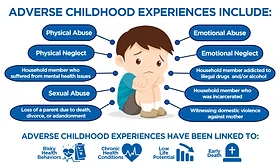
The research on childhood toxic stress and its effect on long term health is a promising and long overdue body of knowledge. The Adverse Childhood Events (ACES) screenings are helpful in identifying children who might be at risk to offer early intervention. It’s also helpful for adults to understand how the things that happened to them early in life may be explanatory for current physical and mental health challenges. Untangling the connection of love and violence is hard to do when they are merged together in an abusive home. When the person who says they love you also hurts you, humiliates you, and neglects your needs, it’s hard to internalize a healthy sense of identity and a positive model for future relationships.
The benefit to this societal awareness is also empowering as it has revealed the potential for all of us to make a difference. Research shows a strong protective effect of having someone who they consider caring in the life of an at risk individual. A strong bond with at least one adult is a significant buffer against negative mental health outcomes and behavioral problems. We can be that person if we pay attention and make the effort. Being a grandparent, uncle, aunt, cousin, mentor, neighbor or teacher gives us access to offering a relationship that can fill a gap and provide a touchstone of safety for someone who feels alone and vulnerable. A dose of a loving relationship now may prevent the need for a dose of psychedelics in the future. Our love and stability is a powerful treatment option we all can deliver.
Thank you for this incredibly helpful post – I have shared it with so many people. Your discussion of childhood trauma helps one get one’s head around it all…….